Welcome to the 4th Annual Conference on Soft Mist Inhalers (SMIs)

SMI.London 2026
will take place on
Wednesday 10 June 2026
at the
Royal College of General Practitioners
30 Euston Square
London

This year we will focus on innovations from academia and early phase research. As we prepare the programme for the day, we invite academic researchers engaged in SMI R&D to send in their ideas for oral and poster presentations during the event. We would be pleased to consider them and help the academic community contribute fully to the SMI field. Send us an email with your ideas at info@smi.london to ask for an invitation.

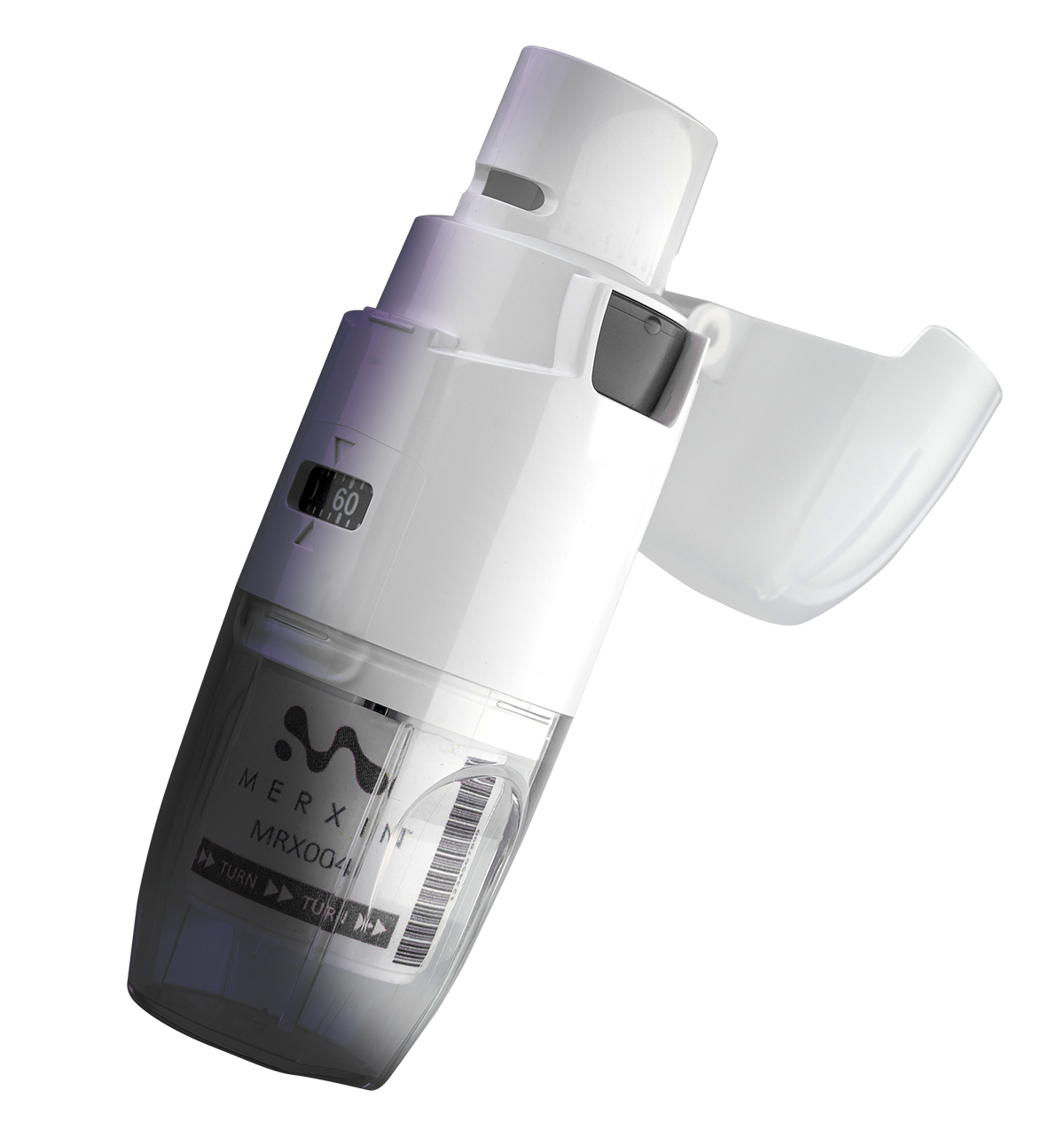
Soft mist inhalers now represent nearly half of the portable inhaler market, reflecting their growing importance in both clinical and sustainability contexts. Recognized for their exceptional aerosol performance, deep-lung deposition, and reduced carbon footprint, SMIs are redefining standards in inhaled drug delivery. Their adaptability, user-friendly design, and strong compatibility with biologic therapies make them a vital platform for the next generation of respiratory and systemic treatments.

SMI are the essential “green inhaler”, ahead of pMDIs, nebulisers. They are also the tool for early phase clinical studies and ensure the smoothest transition to finished dosage form and market launch.

About

SMI.London 2026 – Advancing the Science of Soft Mist Inhalers

Building on the insightful discussions started in 2023, SMI.London 2026 continues to serve as the world’s leading hub for knowledge exchange and collaboration between academic researchers, industry innovators, and regulatory experts in inhaled drug delivery.

Participants will gain insights from key opinion leaders and pioneers in the field of inhaled therapeutics, sharing the latest advances in device design, aerosol performance, and formulation science.

SMI.London 2026 will take place on Wednesday, 10 June 2026, at 30 Euston Square, London.

Exhibition and partnership opportunities are available for organisations involved in SMI technologies, analytical services, and drug delivery innovation.

Join us in shaping the future of inhaled therapy.
Let’s make the future together

Speakers

Nicolas Schwenck

Head of Business Development and Partnerships, Ebenbuild GmbH

Digital Twin Evaluates Breath Actuated SMI Lung Dose

  • Simulation of aerosol transport and regional deposition using CT-derived airway geometries and a physics-based whole-lung model

  • Quantification of the local dose at the site of action across lung regions for pharmacopeial breathing assumptions and measured real-world breathing profiles

  • Integration of in vitro aerosol characteristics from different aerosol-generating device classes: SMI, DPI and pMDI

  • Device-class dependent differences in regional lung deposition identified across breathing patterns, enabling extension of the framework to virtual cohort studies for in silico evaluation of inhaled drug delivery

Ben Forbes

Professor of Pharmaceutics, King’s College London

Characterising SMI aerosol performance in vitro

  • Nasal Deposition

  • Alberta Idealised Nasal Inlet

  • Aerodynamic Particle Size Distribution

  • Next Generation Impactor

  • Effect of flow rate & Temperature

Tuncay Alan

Associate Professor, Monash University

PALM, A Tuneable Low-Stress SMI Platform

  • Nozzle-free oscillating microchannel technology generates low-velocity (<1 m/s), low-shear aerosols

  • Tuneable droplet size and plume characteristics deliver precise aerosol performance, achieving 93% fine particle fraction (NGI)

  • The system delivers proteins and viscous formulations while preserving biological activity

  • Adaptive dosing enables on-demand adjustment of output and droplet velocity, from low to high-throughput delivery

  • Fully integrated handheld device combining microfluidics, actuation and electronic control, with cartridge-based delivery, designed for partner evaluation and scalable, low-cost manufacturing

Chantelle Ahlenstiel

Associate Professor, Kirby Institute, UNSW Sydney

An SMI delivery platform for siRNA therapeutics

  • Optimised LNP formulation for respiratory delivery of siRNA

  • Targeting the nasopharynx for upper respiratory tract virus infections

  • Advancing respiratory models with ALI-cultures and live virus challenge 

  • Safety and antiviral efficacy of siRNA-LNP in a SARS-CoV-2 mouse model

  • Platform technology broadly applicable for respiratory disease

Madeline Zhang

PhD researcher, University of Amsterdam

Improving ICU aerosol therapy with soft mist technology

  • On-demand absolute humidification using a soft mist nozzle decouples gas flow humidification from heating, while maintaining clinical safety thresholds

  • Improved drug delivery efficiency by reducing undesired deposition in breathing circuits through partial evaporation of drug droplets, for both high-flow nasal cannula (HFNC) therapy and invasive mechanical ventilation (IMV)

  • Bench measurements translated to regional respiratory tract deposition using simulations, providing insights into effective dose in target regions

  • Pulmonary diseases alter regional deposition, highlighting the potential need for adaptive aerosol therapy strategies

Darragh Murnane

Merxin Ltd

Building The Future: Inhaled Therapies In Development

  • A range of novel therapeutic modalities are emerging for respiratory delivery

  • There are few examples of novel modalities with regulatory approvals to guide the pathway for development

  • This talk will examine the types of therapeutic modalities currently in clinical trials and assess progression success through translational phases

  • We will identify the range of therapeutic modalities which inhaler device specialists can expect to manage in the coming years.  

Hao-Ying Li

Researcher, King’s College London

Targeted Delivery Enabled By Rayleigh SMIs

  • Elucidate the essence of the formation of LNP-mRNAs.

  • Insights into the changes of LNP-mRNAs under shear stress (theoretically explain their instability under HFMV)

  • Soft mists for the delivery of LNP-mRNAs to targeted regions in nasal cavity

  • Soft mists for the delivery of LNP-mRNAs to the lungs

  • Some corrigendum of concepts

Laleh Golshahi

PhD, Associate Professor, VCU & Founder & CEO, 3DInhale

How to Tune a Nasal SMI Product

  • Existing pre-clinical tools fail to capture combined device–technique–breathing effects. 

  • Anatomical nasal casts enable controlled multi-parameter deposition evaluation. 

  • Spray design and plume geometry dominate deposition over breathing. 

  • Administration orientation drives regional coverage; generalized guidance is achievable. 

  • Olfactory targeting likely requires device-specific, not generalized, strategies.

Clive P. Page

Professor of Pharmacology, King’s College London

The Ensifentrine Story: A Bifunctional Therapy For Respiratory Diseases

  • The need for new therapies for asthma and COPD

  • Will discuss the discovery and development of ensifentrine

  • First in class inhaled "bifunctional" drug combining anti-inflammatory and bronchodilator activity in a single molecule

  • Positioning of ensifentrine in the treatment of COPD

  • Future developments

Venue

Royal College of General Practitioners

30 Euston Square

London

NW1 2FB

10th June 2026

Located in the heart of central London, 30 Euston Square is an award winning, Grade II listed venue, and home to the Royal College of General Practitioners.

Schedule

8:00

Registration, Refreshments & Networking

Chair of Session:  Peter Hirst, Head Of BD, Merxin Ltd

9:30

Welcome To SMI.London 2026 - The SMI Year In Review
What Is The Latest Gossip?

Philippe Rogueda, CBO Merxin Ltd

10:00

Targeted Delivery Enabled By Rayleigh SMIs

Hao-Ying Li, Researcher, King’s College London

  • Elucidate the essence of the formation of LNP-mRNAs.

  • Insights into the changes of LNP-mRNAs under shear stress (theoretically explain why VMN does not work)

  • Soft mists for the delivery of LNP-mRNAs to targeted regions in nasal cavity

  • Soft mists for the delivery of LNP-mRNAs to the lungs

  • Some corrigendum of concepts

10:30

Coffee break, Exhibition & Networking

11:00

PALM, A Tuneable Low-Stress SMI Platform

Tuncay Alan, Associate Professor, Monash University

  • Nozzle-free oscillating microchannel technology generates low-velocity (<1 m/s), low-shear aerosols

  • Tuneable droplet size and plume characteristics deliver precise aerosol performance, achieving 93% fine particle fraction (NGI)

  • The system delivers proteins and viscous formulations while preserving biological activity 

  • Adaptive dosing enables on-demand adjustment of output and droplet velocity, from low to high-throughput delivery 

  • Fully integrated handheld device combining microfluidics, actuation and electronic control, with cartridge-based delivery, designed for partner evaluation and scalable, low-cost manufacturing

11:30

Digital Twin Evaluates Breath Actuated SMI Lung Dose

Nicolas Schwenck, Head of BD & Partnerships, Ebenbuild GmbH

  • Simulation of aerosol transport and regional deposition using CT-derived airway geometries and a physics-based whole-lung model

  • Quantification of the local dose at the site of action across lung regions for pharmacopeial breathing assumptions and measured real-world breathing profiles

  • Integration of in vitro aerosol characteristics from different aerosol-generating device classes: SMI, DPI and pMDI

  • Device-class dependent differences in regional lung deposition identified across breathing patterns, enabling extension of the framework to virtual cohort studies for in silico evaluation of inhaled drug delivery

12:00

Characterising SMI aerosol performance in vitro

Ben Forbes, Professor of Pharmaceutics, King’s College London

  • Nasal Deposition

  • Alberta Idealised Nasal Inlet

  • Aerodynamic Particle Size Distribution

  • Next Generation Impactor

  • Effect of flow rate & Temperature

12:15

Lunch, Exhibition & Networking

Chair of Session:  Francesca Buttini, Associate Professor, University of Parma

13:30

How to Tune a Nasal SMI Product

Laleh Golshahi, PhD, Associate Professor, VCU & Founder & CEO, 3DInhale

  • Existing pre-clinical tools fail to capture combined device–technique–breathing effects. 

  • Anatomical nasal casts enable controlled multi-parameter deposition evaluation. 

  • Spray design and plume geometry dominate deposition over breathing. 

  • Administration orientation drives regional coverage; generalized guidance is achievable. 

  • Olfactory targeting likely requires device-specific, not generalized, strategies.

14:00

Improving ICU aerosol therapy with soft mist technology

Madeline Zhang, PhD Researcher, University of Amsterdam

  • On-demand absolute humidification using a soft mist nozzle decouples gas flow humidification from heating, while maintaining clinical safety thresholds

  • Improved drug delivery efficiency by reducing undesired deposition in breathing circuits through partial evaporation of drug droplets, for both high-flow nasal cannula (HFNC) therapy and invasive mechanical ventilation (IMV)

  • Bench measurements translated to regional respiratory tract deposition using simulations, providing insights into effective dose in target regions

  • Pulmonary diseases alter regional deposition, highlighting the potential need for adaptive aerosol therapy strategies

14:30

An SMI delivery platform for siRNA therapeutics

Chantelle Ahlenstiel, Professor,  Kirby Institute, UNSW Sydney

  • Optimised LNP formulation for respiratory delivery of siRNA

  • Targeting the nasopharynx for upper respiratory tract virus infections

  • Advancing respiratory models with ALI-cultures and live virus challenge

  • Safety and antiviral efficacy of siRNA-LNP in a SARS-CoV-2 mouse model

  • Platform technology broadly applicable for respiratory disease

15:00

Coffee break, Exhibition & Networking

Chair of Session:  Ayca Pekoz, Professor, Istanbul University

15:30

Building The Future: Inhaled Therapies In Development

Darragh Murnane, Royal Society Industrial Fellow, Merxin Ltd

  • A range of novel therapeutic modalities are emerging for respiratory delivery

  • There are few examples of novel modalities with regulatory approvals to guide the pathway for development 

  • This talk will examine the types of therapeutic modalities currently in clinical trials and assess progression success through translational phases 

  • We will identify the range of therapeutic modalities which inhaler device specialists can expect to manage in the coming years.

16:00

The Ensifentrine Story: A Bifunctional Therapy For Respiratory Diseases

Prof. Clive P. Page OBE, Professor of Pharmacology, King’s College London

  • The need for new therapies for asthma and COPD

  • Will discuss the discovery and development of ensifentrine

  • First in class inhaled "bifunctional" drug combining anti-inflammatory and bronchodilator activity in a single molecule

  • Positioning of ensifentrine in the treatment of COPD

  • Future developments

16:30

Panel Discussion & final remarks

17:00

Close of the day

Register

Registration for SMI.London 2026 is now open.

Registration fee includes:

  • Full conference attendance to lectures, networking sessions and exhibition.

  • Conference slides post conference, dependant on permission granted by Speakers.

  • Full day catering.

Register before 30 April 2026 for your EARLY BIRD delegate ticket for just £625.00 (excl. UK VAT) before prices rise to £705.00 (excl. UK VAT) in May.

Note: Discounts are available for groups of more than 5 registrants from the same institution, and for members of academic institutions. Please email info@smi.london for more information.

Credit card payments are accepted online. If you wish to pay via bank transfer, please ensure that payment is received within 7 days of your invoice date

You consent for your information to be shared with the event partners. It is not possible to register without agreeing to this consent.

You accept our Terms & Conditions

Looking to exhibit?

Would you like to be part of the SMI.London 2026 exhibition?

A limited number of table-top exhibition options are available. Exhibition benefits include:

  • Physical presence at the event

  • Table-top or space for exhibiting your services and products

  • 2 free registrations for your staff

  • Full participants’ list post event

  • Full listing on the conference website

  • Acknowledgement on social media and SMI.London 2026 communications

The exhibition fee: £3,350 (excl UK VAT). Please email info@smi.london to book your space.

Exhibitors

Media Partners

Previous Events

Please visit our previous years here: